Tungsten trioxide #CAS1314-35-8

    CAS Number:1314-35-8

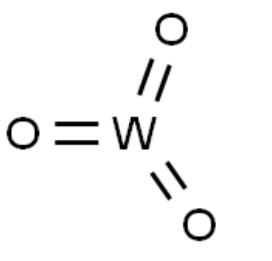
             Chemical Formula: O3W

  • Synonyms:

    • Tungsten(VI)oxide(min.99.8%-W)

    • tungsten(vi) oxide, puratronic

    •        TUNGSTENOXIDE,POWDER

      Appearance: Colourless gas

    MOQ (Minimum Order Quantity): 1 FCL (Full Container Load)


Product Details

Tungsten trioxide #CAS1314-35-8

Tungsten trioxide is a chemical compound consisting of oxygen and the transition metal tungsten. It occurs naturally but rarely in the form of hydrates in some kinds of minerals. It has various applications. In industry, it can be used for making x-ray screen phosphors, fireproofing fabrics and gas sensors as well as a pigment in ceramics and paints. It can also be used for the preparation of electrochromic windows or smart windows. In addition, it can be used in semiconductors. It, together with titanium dioxide, has the potential to become an efficient photo-catalyst under visible light irradiation. Recent study has shown that mesoporous tungsten trioxide polyaniline nanocomposite can be used as an anode material for high-performance lithium-ion batteries.

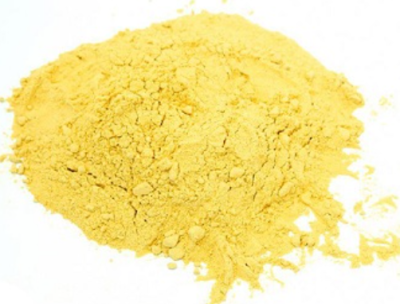
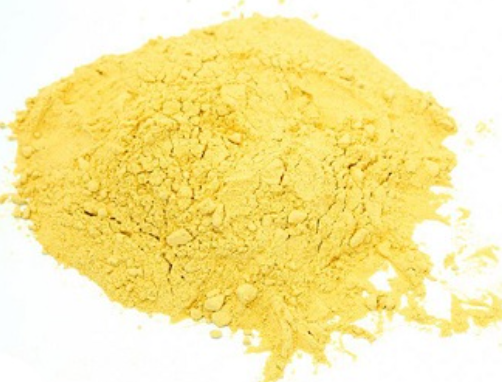
Tungsten trioxide is a bright canary-yellow coloured powder which becomes dark-orange on heating, but regains its bright yellow colour on cooling. A very slight admixture of sodium salt imparts to the oxide a greenish tint which no amount of oxidation can remove (Roscoe). It also becomes greenish on exposure to light. Tungsten trioxide has been obtained in the crystalline state by Debray, by igniting a mixture of tungstate and carbonate of sodium in a current of hydrochloric acid, when the trioxide is obtained in olive-green rectangular prisms which sublime at a white heat. The crystalline trioxide has also been prepared by heating hydrated tungstic acid with borax in a porcelain furnace (Nordenskjold). The specific gravity of tungsten trioxide thus obtained is 6.34.

Application of Tungsten trioxide 

Tungsten trioxide is a thermally stable and water insoluble tungsten compound. Tungsten trioxide andTungsten blue oxides are both used in the production of tungsten metal powders. The greatmajority of metallic tungsten is used to make cemented carbide parts, and theremainder is used in manufacturing components for lighting, electrical, electronic,heating, and welding applications; and in tool steels, alloys, catalysts, pigments, andhigh-temperature lubricants.

It is used in tungsten and tungstate manufacturing which are used as X-ray screens and for fire proofing fabrics. It is used as a ceramic pigment. Nanowires of Tungsten (VI) oxide are capable of absorbing a higher percentage of the sun radiation since it absorbs blue light.

Tungsten oxide (WO3) is used to make tungsten alloys. Tungsten oxide is also used as fireproofing for various surfaces and is used as a yellow pigment in ceramics.

Tungsten trioxide Chemical Properties
Melting point 1470-1475 °C
Boiling point 1837°C (estimate)
density 7.16 g/mL at 25 °C(lit.)
storage temp. Room Temperature
solubility insoluble in H2O, organic solvents; slightly soluble in acid solutions; soluble in alkaline solutions
form powder
color Yellow to greenish-yellow
Specific Gravity7.16
Water Solubility insoluble
Thermal Conductivity25.104 W/(m·K)
Merck 14,9817
crystal systemMonoclinic
Space groupP21/a
Lattice constanta/nmb/nmc/nmα/oβ/oγ/oV/nm30.72850.75170.38359090.9900.21
Exposure limitsACGIH: TWA 3 mg/m3
NIOSH: TWA 5 mg/m3; STEL 10 mg/m3
Cosmetics Ingredients FunctionsABRASIVE
DEODORANT
InChI1S/3O.W
InChIKeyZNOKGRXACCSDPY-UHFFFAOYSA-N
SMILESO=[W](=O)=O
CAS DataBase Reference1314-35-8(CAS DataBase Reference)
NIST Chemistry ReferenceTungsten trioxide(1314-35-8)
EPA Substance Registry SystemTungsten trioxide (1314-35-8)
Safety Information
Hazard Codes Xn
Risk Statements 22-36/37/38
Safety Statements 26-36-37/39
WGK Germany -
RTECS YO7760000
21
TSCA TSCA listed
HS Code 28259012
Storage Class11 - Combustible Solids
Hazardous Substances Data1314-35-8(Hazardous Substances Data)
Toxicityrat,LD50,oral,1059mg/kg (1059mg/kg),BEHAVIORAL: SOMNOLENCE (GENERAL DEPRESSED ACTIVITY)BEHAVIORAL: EXCITEMENTBEHAVIORAL: MUSCLE WEAKNESS,Hygiene and Sanitation Vol. 31(7-9), Pg. 197, 1966.

Isobutylene is a colorless gas, m.p. -140.35 ℃, b.p. -6.8 ℃, n25D 1.381, relative density 0.673 (-49 ℃), 1.998 in gaseous state, can form explosive mixtures with the air, the explosion limit of 1.7% ~ 9.0% (v/v), soluble in organic solvents, easy to polymerize.

Colorless gas with a coal gas-like odor. The odor threshold concentration is 10 ppmv Nagata and Takeuchi (1990). This gas can be liquefied under pressure. The substance has low solubility in water, soluble in organic solvent, easy to polymerize. It is nonexplosive; however, it forms explosive mixtures with air. Containers holding isobutylene under pressure may explode if heated. The boiling point and freezing point of isobutylene are -6.9°C (19.6°F) and -141°C (-221°F), respectively. Isobutylene is extremely flammable. It is stable under recommended storage conditions and no decomposition may occur if stored and applied as directed.

Isobutylene is a colorless gas with a faint petroleum-like odor. For transportation it may be stenched. It is shipped as a liquefied gas under its own vapor pressure. Contact with the liquid can cause frostbite. It is easily ignited. Its vapors are heavier than air and a flame can flash back to the source of leak very easily. The leak can either be a liquid or vapor leak. It can asphyxiate by the displacement of air. Under prolonged exposure to fire or heat the containers may rupture violently and rocket. It is used in the production of isooctane, a high octane aviation gasoline.

Application of Isobutylene

Isobutylene is an important petrochemical raw material. In the pesticide industry, it is mainly used for the preparation of the organophosphorus insecticide terbufos, the pyrethroid insecticide permethrin and the acaricide pyridaben. Industrially, high-concentration isobutylene is mainly used for the production of polyisobutylene and copolymerization with isoprene to produce butyl rubber. The alkylation reaction of isobutene and isobutane can produce high-octane alkylated gasoline, and methyl tert-butyl ether obtained by reacting with methanol is an excellent gasoline additive.

Isobutylene is used as a monomer for the production of various polymers such as butyl rubber, polybutene and polyisobutylene. The most important application of butyl rubber is the manufacture of tyres for cars and other vehicles. Other applications of butyl rubber, polybutene and poyisobutylene are lubricants (motor oils), adhesives, sealants and coatings. Another major use of isobutylene is the production of methyl-tert-butyl ether (MTBE) and ethy-tert-butyl ether (ETBE) which are gasoline blending components for cleaner burning fuels. Isobutylene is also used for the production of anti-oxidants, fragrances and gas odorization products.

Isobutylene Chemical Properties
Melting point −140 °C
Boiling point −6.9 °C(lit.)
density 0.5879
vapor density 2 (vs air)
vapor pressure 3278 mm Hg ( 37.7 °C)
refractive index 1.3811
Fp -80 °C
form clear liquid
color Colorless to Almost colorless
Odor Threshold10ppm
Water Solubility 263mg/L(25 ºC)
FreezingPoint -140.34℃
Merck 14,5141
BRN 773645
Henry's Law Constant0.20, 0.26, 0.33, and 0.41 at 30, 40, 50, and 60 °C, respectively (Leung et al., 1987:Zhang et al., 2002)
Stability:Stable. Highly flammable - readily forms an explosive mixture with air. Incompatible with strong oxidizing agents.
InChI1S/C4H8/c1-4(2)3/h1H2,2-3H3
InChIKeyVQTUBCCKSQIDNK-UHFFFAOYSA-N
SMILESCC(C)=C
LogP2.35 at 20℃
CAS DataBase Reference115-11-7(CAS DataBase Reference)
EPA Substance Registry SystemIsobutene (115-11-7)
Safety Information
Hazard Codes F+
Risk Statements 12
Safety Statements 9-16-33
RIDADR UN 1055
WGK Germany -
RTECS UD0890000
4.5-31
Autoignition Temperature869 °F
TSCA TSCA listed
DOT Classification2.1 (Flammable gas)
HazardClass 2.1
HS Code 29012330
Storage Class2A - Gases
Hazard ClassificationsFlam. Gas 1
Press. Gas Liquefied gas
Hazardous Substances Data115-11-7(Hazardous Substances Data)
ToxicityLC50 (inhalation) for mice 415 g/m3/2-h, rats 620 g/m3/4-h (quoted, RTECS, 1985).

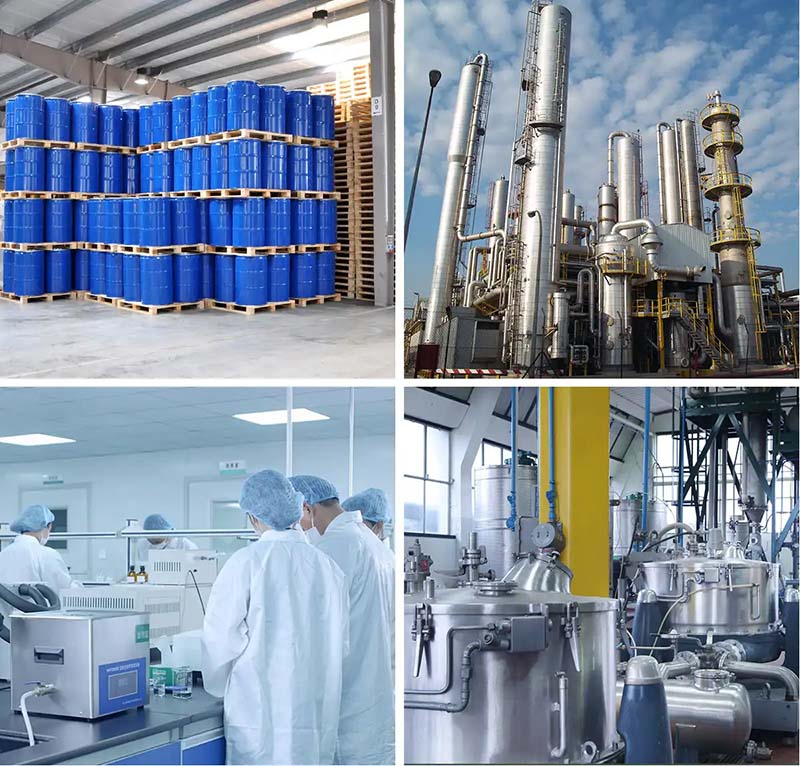
Fact Factory and Equipment Show

Magnesium oxideCAS:1309-48-4


Leave your messages

Related Products

x

Popular products

x