
Boron nitride #CAS10043-11-5
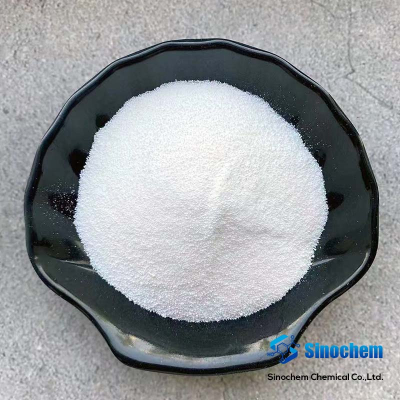
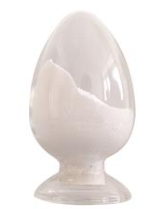
Boron nitride is a crystal composed of nitrogen and boron atoms. Its crystal structure is classified into three types: hexagonal boron nitride (HBN), close-packed hexagonal boron nitride (WBN), and cubic boron nitride. Hexagonal boron nitride has a layered structure similar to graphite, presenting as a loose, lubricating, hygroscopic, and lightweight white powder, hence its alternative name, "white graphite." The coefficient of thermal expansion of hexagonal boron nitride is similar to that of quartz, but its thermal conductivity is ten times that of quartz. It also exhibits good lubricity at high temperatures, making it an excellent high-temperature solid lubricant. It has a strong neutron absorption capacity, is chemically stable, and is chemically inert to almost all molten metals. Hexagonal boron nitride is insoluble in cold water; when boiled, it hydrolyzes very slowly, producing small amounts of boric acid and ammonia. It does not react with weak acids or strong bases at room temperature, is slightly soluble in hot acids, and requires treatment with molten sodium hydroxide or potassium hydroxide to decompose. It exhibits considerable resistance to corrosion from various inorganic acids, bases, salt solutions, and organic solvents. Cubic boron nitride (BN) is a superhard material second only to diamond in hardness. First successfully developed in 1957 by R.H. Winterf in the United States, it not only possesses many of the excellent properties of diamond but also exhibits higher thermal stability and chemical stability towards ferrous metals. It is widely used in the machining of quenched steel, chilled cast iron, heat-resistant alloys, and other ferrous metals. BN is a crystal composed of nitrogen and boron atoms. Its crystal structure is classified into hexagonal boron nitride (HBN), close-packed hexagonal boron nitride (WBN), and cubic boron nitride. Hexagonal boron nitride has a layered structure similar to graphite, presenting as a loose, lubricating, hygroscopic, and lightweight white powder, hence its alternative name, "white graphite." The coefficient of thermal expansion of hexagonal boron nitride is similar to that of quartz, but its thermal conductivity is ten times that of quartz. It also exhibits good lubricity at high temperatures, making it an excellent high-temperature solid lubricant. It has a strong neutron absorption capacity, is chemically stable, and is chemically inert to almost all molten metals. Hexagonal boron nitride (CBN) is insoluble in cold water. When boiled, it hydrolyzes very slowly, producing small amounts of boric acid and ammonia. It does not react with weak acids or strong bases at room temperature, is slightly soluble in hot acids, and requires treatment with molten sodium hydroxide or potassium hydroxide to decompose. It exhibits considerable resistance to corrosion from various inorganic acids, bases, salt solutions, and organic solvents. Cubic boron nitride is a superhard material second only to diamond in hardness. First successfully developed in 1957 by R.H. Untoff in the United States, it possesses many of the excellent properties of diamond, but also exhibits higher thermal stability and chemical stability towards ferrous metals. It is widely used in the machining of quenched steel, chilled cast iron, heat-resistant alloys, and other ferrous metals.
Application of Boron nitride
Boron nitride used in the manufacture of high-temperature equipment parts due to its excellent thermal and chemical stability. It is used as a lubricant and an additive to cosmetics, paints, dental cements and pencil leads. It is also used to provide self lubricating properties to ceramics, alloys, resins, plastics and rubbers. In addition to this, it has many industrial applications such as xerographic process, laser printers, oxygen sensors and proton conductors. Cubic boron nitride is used as an abrasive material.
Boron nitride is a material in which the extra electron of nitrogen (with respect to carbon) enables it to form structures that are isoelectronic with carbon allotropes. Also used in manufacture of alloys; in semiconductors, nuclear reactors, lubricants.
Hexagonal boron nitride can be used as an electrical insulator; as thermocouple protection sheaths, crucibles and linings for reaction vessels; and as a coating for refractory molds used in glass forming and in superplastic forming of titanium. It can also be incorporated in ceramics, alloys, resins, plastics, and rubber to give them self-lubricating properties. Hexagonal boron nitride is used the formulation of coatings and paints for high temperature applications. It is also used as a substrate for semi-conductors, lens coatings, and transparent windows.
Boron nitride is a synthetically manufactured white, talc-like powder that can reflect light, giving a product a sparkle effect. It is primarily used in color cosmetics to provide subtle shimmer; however, it can also be found in skin care formulations for enhancing product smoothness and slip.
| Boron nitride Chemical Properties |
| Melting point | 2700℃ |
| Boiling point | sublimes sl below 3000℃ [MER06] |
| density | 0.9-1.1 g/mL at 25 °C |
| bulk density | 120kg/m3 |
| storage temp. | no restrictions. |
| solubility | insoluble in H2O, acid solutions |
| form | Powder |
| Specific Gravity | 3.48 |
| color | White |
| PH | 5-8 (100g/l, H2O, 20℃)(slurry) |
| Resistivity | 10*19 (ρ/μΩ.cm) |
| Water Solubility | Soluble in water (slightly soluble) at 20°C, and water (soluble) at 95°C. |
| Sensitive | Hygroscopic |
| Crystal Structure | Hexagonal |
| Merck | 14,1346 |
| Stability: | Stable. Incompatible with oxidizing agents, water. |
| Cosmetics Ingredients Functions | SLIP MODIFIER BULKING |
| Cosmetic Ingredient Review (CIR) | Boron nitride (10043-11-5) |
| InChI | 1S/BN/c1-2 |
| InChIKey | PZNSFCLAULLKQX-UHFFFAOYSA-N |
| SMILES | B#N |
| CAS DataBase Reference | 10043-11-5(CAS DataBase Reference) |
| NIST Chemistry Reference | Boron nitride(10043-11-5) |
| EPA Substance Registry System | Boron nitride (BN) (10043-11-5) |
| Safety Information |
| Hazard Codes | Xi |
| Risk Statements | 36/37 |
| Safety Statements | 26-36 |
| RIDADR | UN1950 |
| WGK Germany | 3 |
| RTECS | ED7800000 |
| TSCA | TSCA listed |
| HS Code | 2850 00 20 |
| HazardClass | 2.1 |
| Storage Class | 13 - Non Combustible Solids |
| Toxicity | LD50 orally in Rabbit: > 2000 mg/kg LD50 dermal Rat > 2000 mg/kg |