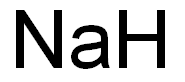
Sodium hydride #CAS7646-69-7
Sodium hydride, is a binary salt that has a specific hazard of releasing hydrogen upon contact with water. It is an odorless powder that is violently water reactive. The four-digit UN identification number is 1427. The NFPA 704 designation is health 3, flammability 3, and reactivity 2. The white space at the bottom of the diamond has a W with a slash through it, indicating water reactivity.
Sodium hydride (abbreviated as sodium hydride) is an ionic crystal, a salt-like compound in which hydrogen is a monovalent negative ion. It is unstable when heated and decomposes before melting. Sodium hydride reacts with water to form sodium hydroxide and release hydrogen gas.
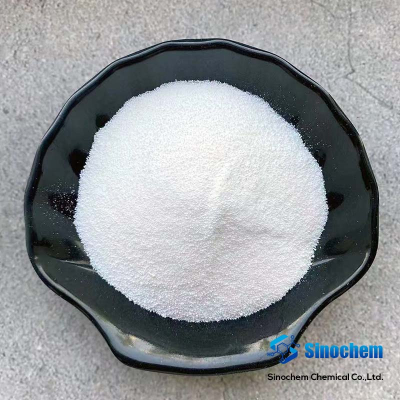
Pure sodium hydride is a silvery needle-like crystal. Commercially available sodium hydride is generally a fine crystalline gray powder, dispersed in oil at a ratio of 25%–50%. Its relative density is 0.92. Sodium hydride crystals have a rock-salt type structure (lattice constant a = 0.488 nm), and like lithium hydride, hydrogen exists as an anion in its ionic crystal form. Its heat of formation is 9.5 kJ·mol⁻¹, and it decomposes into metallic sodium and hydrogen gas at 800℃. Sodium hydride reacts violently with water and lower alcohols, potentially causing combustion or explosion. It ignites spontaneously in moist air. It is soluble in molten sodium hydroxide but insoluble in liquid ammonia, benzene, carbon disulfide, and carbon tetrachloride. Sodium hydride reacts with liquid ammonia at moderate temperatures to form sodium amino acid.
Application of Sodium hydride
Sodium hydride can be used for condensation and alkylation reaction and can be used as a polymerization catalyst, used for the manufacture of drug synthetic and used in fragrance industry, used for manufacturing boron hydrides, used as metal surface rust, reducing agents, condensing agent, desiccant and Clay Johnson's reagents.
Used as a condensing agent, an alkylating agent and a reducing agent, etc.
It is an important reductant for Pharmaceutical, perfumes, dyes, but also as a drying agent, an alkylating agent, etc.
At low temperatures where reducing properties of sodium are undesirable as in the condensation of ketones and aldehydes with acid esters; in solution with molten sodium hydroxide for the reduction of oxide scale on metals; at high temperatures as a reducing agent and reduction catalyst.
Sodium hydride is used to enhance the condensation reactions of carbonyl compounds through the Dieckmann condensation, Stobbe condensation, Darzens condensation and Claisen condensation. It acts as a reducing agent used to prepare diborane from boron trifluoride. It is also used in fuel cell vehicles. Further, it is used to dry some organic solvents. In addition to this, it is involved in the preparation of sulfur ylides, which is utilized for the conversion of ketones into epoxides.
Direct intercalation into C60 results in the superconducting material (NaH)4C60.
| Sodium hydride Chemical Properties |
| Melting point | 800 °C (dec.) (lit.) |
| density | 1.2 |
| Fp | 185°C |
| storage temp. | Store below +30°C. |
| solubility | Soluble in molten sodium. Insoluble in ammonia, benzene,carbon tetrachloride, carbon disulfide and all organic solvents. |
| form | powder (moistened with oil) |
| color | White to pale gray |
| Water Solubility | REACTS |
| Sensitive | Air & Moisture Sensitive |
| Merck | 14,8625 |
| Exposure limits | ACGIH: TWA 5 mg/m3 OSHA: TWA 5 mg/m3 NIOSH: IDLH 2500 mg/m3; TWA 5 mg/m3; STEL 10 mg/m3 |
| InChI | InChI=1S/Na.H |
| InChIKey | MPMYQQHEHYDOCL-UHFFFAOYSA-N |
| SMILES | [NaH] |
| CAS DataBase Reference | 7646-69-7(CAS DataBase Reference) |
| NIST Chemistry Reference | Sodium hydride(7646-69-7) |
| EPA Substance Registry System | Sodium hydride (NaH) (7646-69-7) |
| Safety Information |
| Hazard Codes | F,C |
| Risk Statements | 15-36-35-11 |
| Safety Statements | 26-43-7/8-43A-24/25-7-60-22-45-37/39-16 |
| RIDADR | UN 1427 |
| WGK Germany | 3 |
| RTECS | WB3910000 |
| F | 10-21 |
| TSCA | TSCA listed |
| HazardClass | 4.3 |
| PackingGroup | I |
| HS Code | 28500090 |
| Storage Class | 4.3 - Hazardous materials which set free flammable gases upon contact with water |
| Hazard Classifications | Eye Dam. 1 Flam. Sol. 1 Met. Corr. 1 Skin Corr. 1A Water-react 1 |
| Hazardous Substances Data | 7646-69-7(Hazardous Substances Data) |
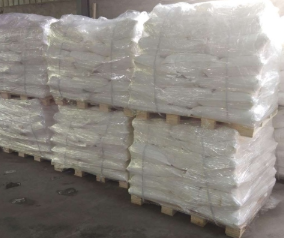
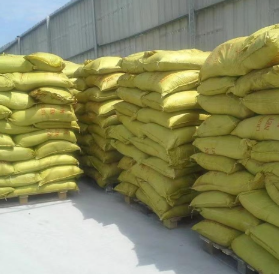
Fact Factory and Equipment Show