Boron carbide #CAS12069-32-8
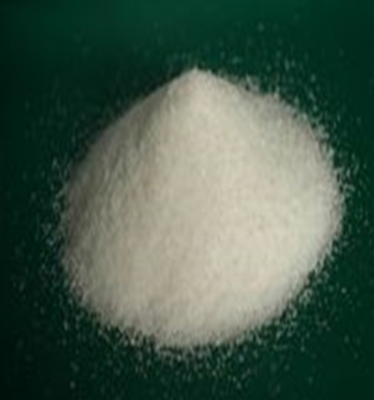
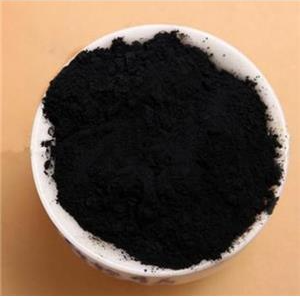
Boron carbide is black crystal with metallic luster, hardness ranks only second to diamond, higher than silicon carbide, Mohs hardness is 9.3. Chemical property is stable, it does not react with the acid solution, the formula is B4C, relative density is 2.52, melting point is 2350℃, boiling point is higher than 3500℃. The melt boron carbide can dissolve in a large amount of boron carbide graphitic carbon. Boron carbide is stable in dilute acid solution, the mixed acid of sulfuric acid and hydrofluoric acid, the mixed acid of sulfuric acid and nitric acid can decompose boron carbide. When heated to 1000℃, it is slowly oxidized to carbon dioxide and boron oxide in oxygen. Boron carbide has high thermal neutron capture capability, it is wear-resisting, it has semiconducting properties. In most cases, because boron carbide (of B4C) is used as control materials, it can meet the requirements of high-temperature reactors. Increasing the concentration of B10 in the boron carbide can improve the control efficiency of boron material. Boron carbide has a density of 2.51 × 10³kg/m3, melting point is 2450 ℃, the thermal expansion coefficient (20~800 ℃) is 4.5 × 10⁻⁶/℃.
Boron carbide, also known as black diamond, is an inorganic substance with the chemical formula B4C (often written as B12C3 ). It is usually a gray-black powder. It is one of the three hardest materials known (second only to diamond and cubic boron nitride), and is used in tank armor, bulletproof vests, and many industrial applications. Its Mohs hardness is approximately 9.5.
It was discovered in the 19th century as a by-product of the research on metal borides, and was not scientifically studied until the 1930s. Boron carbide can be produced in an electric furnace by reducing boric oxide with carbon.
Boron carbide can absorb a large number of neutrons without forming any radioactive isotopes. Therefore, it is an ideal neutron absorber in nuclear power plants, and neutron absorbers mainly control the rate of nuclear fission. Boron carbide is mainly made into controllable rods in nuclear reactor plants, but sometimes it is made into powder form to increase the surface area.
Due to its characteristics of low density, high strength, high temperature stability, and good chemical stability. It is used in wear-resistant materials, ceramic reinforcing phases, especially in lightweight armor, and reactor neutron absorbers. In addition, compared with diamond and cubic boron nitride, boron carbide is easier to manufacture, has a lower cost, and is therefore more widely used. It can replace expensive diamond in some places and is commonly used in applications such as grinding, polishing, and drilling.
Application of Boron carbide
Boron carbide (B4C) is produced by the hightemperature(about 1371 to 2482°C) interactionof boric oxide, B2O3, and carbon in an electricalresistance-type furnace. It is a black, lustroussolid. It is used extensively as an abrasive,because its hardness approaches that of the diamond.It is also used as an alloying agent, particularlyin molybdenum steels.
Additionally, it is used in drawing dies andgauges, or into heat-resistant parts such as nozzles.The composition is either B6C or B4C; theformer is the harder but usually contains anexcess of graphite difficult to separate in thepowder. It can be used thus as a deoxidizingagent for casting copper, and also for lapping,since the graphite acts as a lubricant. Borofluxis B4C with flake graphite, used as a casting flux.B4C parts are fabricated by hot pressing,sintering, and sinter-HIPing (HIP = hot-isostaticpress). Industrially, densification is carriedout by hot pressing (2100 to 2200°C, 20to 40 MPa) in argon. The best properties areobtained when pure fine powder is densifiedwithout additives. Pressureless sintering to highdensity is possible using ultrafine powder, withadditives (notably carbon). Less expensive thanhot pressing, sintering also can be used for morecomplex shapes.
Special part formulations include bondingB4C with fused sodium silicate, borate frits,glasses, plastics, or rubbers to lend strength,hardness, or abrasion resistance. B4C-based cermets and MMC (especially Al/B4C, Mg/B4C, Ti/B4C), and CMCs (e.g., TiB2/B4C) haveunique properties, including superior ballisticperformance, that make these materials suitablefor highly specialized applications. Hightemperaturestrength, light weight, corrosionresistance, and hardness make these compositesespecially attractive. B4C shapes can bereaction-bonded using SiC as the bondingphase. B4C–C mixtures are formed, thenreacted with silicon to create the SiC bond. SiCalso can be used as a sintering aid for B4C, andvice versa.
Boron carbide is a hard boron-carbon ceramic material used in tank armor, bulletproof vests, engine sabotage powders, neutron absorber, cutting tools and dies and in brake linings of vehicles. It acts as an antioxidant additives in magnesia-carbon bricks. It is used as a precursor in the production of boron containing materials such as titanium boride.
Boron carbide (B4C) is a hard, black crystal that is used as an abrasive powder and as an additive to strengthen composite parts in aircraft.
| Boron carbide Chemical Properties |
| Melting point | 2450°C |
| Boiling point | 3500°C |
| density | 2.51 g/mL at 25 °C (lit.) |
| storage temp. | 2-8°C |
| solubility | insoluble in H2O, acid solutions |
| form | powder |
| color | Black |
| Specific Gravity | 2.51 |
| Resistivity | 4500 (ρ/μΩ.cm) |
| Water Solubility | Insoluble in water. |
| Thermal Conductivity | 17.154 W/(m·K) (porous); 28.451 W/(m·K) (dense) |
| Crystal Structure | Hexagonal |
| Merck | 14,1344 |
| Stability: | Stable. Incompatible with oxidizing agents. Not flammable. |
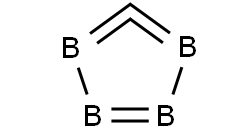
| InChI | 1S/CB4/c1-2-4-5-3-1 |
| InChIKey | NOJMLSPGQSYAIT-UHFFFAOYSA-N |
| SMILES | B1=BB=C=B1 |
| CAS DataBase Reference | 12069-32-8(CAS DataBase Reference) |
| NIST Chemistry Reference | Boron carbide(12069-32-8) |
| EPA Substance Registry System | Boron carbide (B4C) (12069-32-8) |
| Safety Information |
| Hazard Codes | Xn |
| Risk Statements | 20 |
| Safety Statements | 22-36/37/39-38 |
| WGK Germany | 3 |
| RTECS | ED7420000 |
| TSCA | TSCA listed |
| HS Code | 28499010 |
| Storage Class | 11 - Combustible Solids |
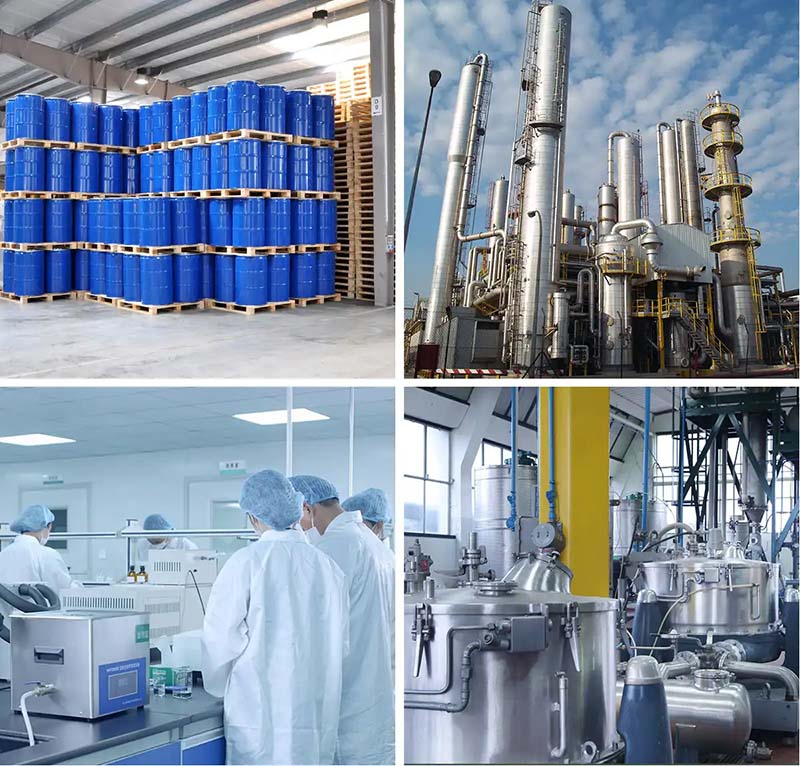
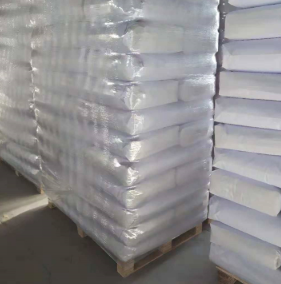
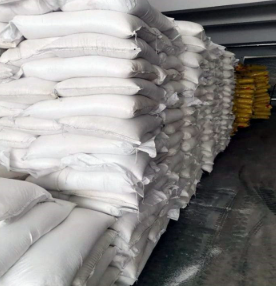
Fact Factory and Equipment Show