Talc #CAS14807-96-6
Soapstone is composed primarily of talc, and has been used for most of recorded history as a carving medium; examples thousands of years old are still extant from Egyptian, Assyrian, and Chinese cultures. The term ‘talc’ was first used in AD 869 to describe minerals that were largely composed of what we now know as talc.
Application of Talc
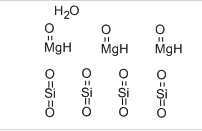
Talc is a mineral composed of hydrated magnesium silicate with the chemical formula H2Mg3(SiO3)4 or Mg3Si4O10(OH)2. Talc is used in many industries such as paper making, plastic, paint and coatings, rubber, food, electric cable, pharmaceuticals, cosmetics.
Dusting powder, either alone or with starch or boric acid, for medicinal and toilet Preparations; excipient and filler for pills, tablets and for dusting tablet molds; clarifying liquids by filtration. As pigment in paints, varnishes, rubber; filler for paper, rubber, soap; in fireproof and cold-water paints for wood, metal and stone; lubricating molds and machinery; glove and shoe powder; electric and heat insulator.
talc adds softness and sliding ability to a cosmetic formulation. It is also used as a bulking and opacifying agent, and as an absorbent in makeup preparations. Talc is an inert powder, generally made from finely ground magnesium silicate, a mineral.
| Talc Chemical Properties |
| Melting point | 800 °C |
| density | 2.7-2.8 |
| vapor pressure | 0Pa at 25℃ |
| storage temp. | Sealed in dry,Room Temperature |
| solubility | Practically insoluble in water, in ethanol (96 per cent) and in dilute solutions of acids and alkali hydroxides. |
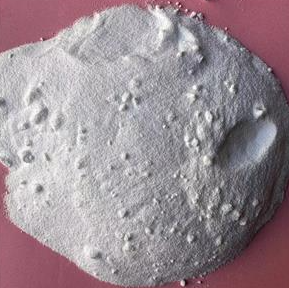
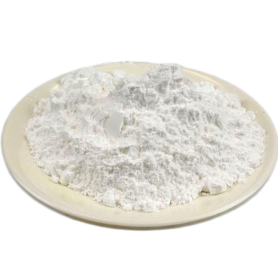
| form | Powder/Solid |
| color | White to pale gray |
| Odor | at 100.00%. odorless |
| Water Solubility | Insoluble in water, cold acids, alkalies. |
| Thermal Conductivity | 2.971 W/(m·K) |
| Merck | 14,9037 |
| Exposure limits | ACGIH TLV-TWA:2 mg/m3,Respirable particulate matter (containing no asbestos and < 1% crystalline silica) NIOSH REL-TWA:2 mg/m3;IDLH:1000 mg/m3 |
| Cosmetics Ingredients Functions | BULKING SKIN PROTECTING ABRASIVE ABSORBENT ANTICAKING OPACIFYING SLIP MODIFIER |
| InChIKey | FPAFDBFIGPHWGO-UHFFFAOYSA-N |
| LogP | -9.4 at 25℃ |
| Hardness, Mohs | 1.0 |
| Hardness, Vickers | 47 |
| IARC | (Vol. 42, Sup 7) 1987, 3 (Vol. 42, Sup 7, 93) 2010, 2B (Vol. 93) 2010 |
| EPA Substance Registry System | Talc (14807-96-6) |
| Safety Information |
| Hazard Codes | Xn |
| Risk Statements | 20-37 |
| Safety Statements | 36 |
| OEB | B |
| OEL | TWA: 2 mg/m3 (resp) |
| WGK Germany | - |
| RTECS | WW2710000 |
| TSCA | TSCA listed |
| HS Code | 25262020 |
| Hazardous Substances Data | 14807-96-6(Hazardous Substances Data) |
| Toxicity | A finely powdered hydrous magnesium silicate. It is used in a variety of industrial processes and products, including rubber, paints, lubricants, insulating materials, cosmetics, and toiletries, such as baby and dusting powders. Acute inhalation of large quantities of talc, such as infants aspirating a massive amount of powder, has caused death within hours because of drying of the mucous membranes, clogging of the smaller airways, pulmonary edema and pneumonia. Chronic inhalation of talc, such as occurs in talc miners, leads to talcosis (a pneumoconiosis) involving pulmonary fibrosis and pleural sclerosis. Lymph nodes can also be affected. There are suggestions that talc can result in cervical or ovarian cancer although evidence for this is not extensive. Some talc is contaminated with asbestos. |
| IDLH | 1,000 mg/m3 |
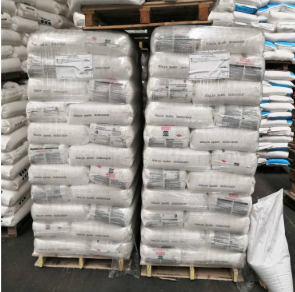
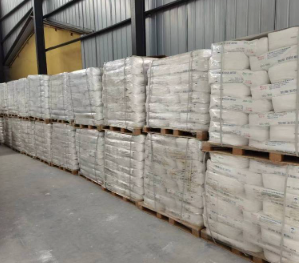
Fact Factory and Equipment Show