Calcium Carbonate #471-34-1
Calcium carbonate #471-34-1
Calcium carbonate occurs in nature as limestone in various forms, such as marble, chalk, and coral. It is probably the most widely-used raw material in the chemical industry. It has numerous applications, primarily to produce cement, mortars, plasters, refractories, and glass as building materials. It also is used to produce quicklime, hydrated lime and a number of calcium compounds. It is produced either as powdered or precipitated calcium carbonate. The latter consists of finer particles of greater purity and more uniform size. They also have many important commercial applications. Various grades of precipitated calcium carbonate are used in several products, such as textiles, papers, paints, plastics, adhesives, sealants, and cosmetics.
Calcium carbonate occurs in two forms—hexagonal crystal known as calcite, and orthorhombic form, aragonite. Calcite decomposes on heating at 825°C, aragonite melts at 1,339°C (at 102.5 atm). Density 2.71 g/cm3 (calcite), 2.83 g/cm3 (aragonite); insoluble in water (15mg/L at 25°C); Ksp 4.8x10⁻⁹ ; soluble in dilute mineral acids.
Application of Calcium Carbonate
Calcium carbonate is probably the most widely used raw material in the chemical industry. It has numerous applications, primarily to produce cement, mortars, plasters, refractories, and glass as building materials. It is also used to produce quicklime, hydrated lime and a number of calcium compounds.
Humans primarily use calcium carbonate as a primary source of calcium to combat osteoporosis. Most limestone is used today as construction material. In addition to its use as a construction material, calcium carbonate is also used in numerous industrial processes. Two forms commonly used are ground calcium carbonate (gcc) and precipitated calcium carbonate (pcc).
Calcium carbonate is used widely in papermaking as filler and coating pigment to whiten paper. Calcium carbonate is used in place of more expensive optical brightening agents in paper and as a fill to replace more expensive wood pulp fiber; it also helps control the pH in an alkaline range.
The second most common industrial use of calcium carbonate (after papermaking) representing the largest use of gcc is in the production of plastics. It is used in the production of polyvinyl chloride (PVC), thermoset polyesters, and polyolefins. Calcium carbonate can be used to replace resins that are more expensive. Similar to its use in the paper industry, it is used as an optical brightener and whitening agent. It also is used to increase strength and absorb heat during exothermic processes.
Calcium carbonate is also used in the production of polyethylene and polypropylene. It is an additive to paints and coatings for several purposes including particle size distribution, opacity control, weather resistance, pH control, and anticorrosion. Calcium carbonate is used to buff er acidic soils.
Calcium carbonate has also been used to mitigate the effects of acid precipitation on water bodies. Another environmental application of calcium carbonate is for gas desulfurization in scrubbers used to reduce sulfur emissions from air pollution sources.
| Calcium carbonate Chemical Properties |
| Melting point | 825 °C |
| Boiling point | 800 °C |
| bulk density | 300-1400kg/m3 |
| density | 2.93 g/mL at 25 °C (lit.) |
| refractive index | 1.6583 |
| storage temp. | Store at +5°C to +30°C. |
| solubility | 5 M HCl: 0.1 M at 20 °C, clear, colorless |
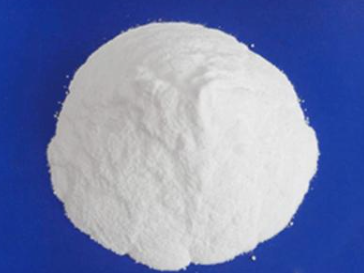
| form | random crystals |
| color | White-beige to slightly beige-gray |
| Specific Gravity | 2.93 |
| PH | 9.91(1 mM solution);9.91(10 mM solution);9.91(100 mM solution); |
| Flame Color | Red-orange |
| Odor | Odorless |
| PH Range | 8 |
| Water Solubility | Insoluble |
| Thermal Conductivity | 0.92 W/(m·K); 2.259 W/(m·K) |
| λmax | λ: 260 nm Amax: ≤0.09 λ: 280 nm Amax: ≤0.06 |
| Merck | 14,1657 |
| BRN | 8008338 |
| Solubility Product Constant (Ksp) | pKsp: 8.54 |
| Exposure limits | NIOSH: TWA 10 mg/m3; TWA 5 mg/m3 |
| Dielectric constant | 6.1(Ambient) |
| Stability: | Stable. Incompatible with acids, fluorine, ammonium salts, alum. |
| Cosmetics Ingredients Functions | BULKING BUFFERING ABRASIVE ORAL CARE COLORANT OPACIFYING |
| Cosmetic Ingredient Review (CIR) | Calcium carbonate (471-34-1) |
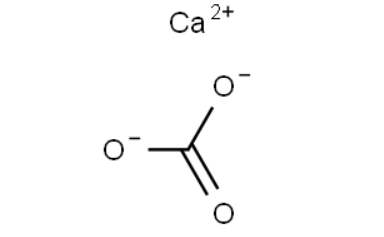
| InChI | 1S/CH2O3.Ca/c2-1(3)4;/h(H2,2,3,4);/q;+2/p-2 |
| InChIKey | VTYYLEPIZMXCLO-UHFFFAOYSA-L |
| SMILES | [Ca++].[O-]C([O-])=O |
| Hardness, Mohs | 2.0 - 5.0 |
| Hardness, Shore H | 10 - 60 |
| Modulus of Elasticity | 10.0 - 80.0 GPa |
| Drilling Hardness | 50 |
| Hardness, Knoop | 75 - 120 |
| Hardness, Vickers | 105 - 136 |
| CAS DataBase Reference | 471-34-1(CAS DataBase Reference) |
| EPA Substance Registry System | Calcium carbonate (471-34-1) |
| Safety Information |
| Hazard Codes | Xi |
| Risk Statements | 37/38-41-36/38-36 |
| Safety Statements | 26-36/37/39-37/39-37 |
| OEB | B |
| OEL | TWA: 10 mg/m3 (total) |
| WGK Germany | - |
| RTECS | FF9335000 |
| TSCA | TSCA listed |
| HS Code | 28365000 |
| Storage Class | 13 - Non Combustible Solids |
| Hazardous Substances Data | 471-34-1(Hazardous Substances Data) |
| Toxicity | LD50 orally in Rabbit: 6450 mg/kg LD50 dermal Rat > 2000 mg/kg |
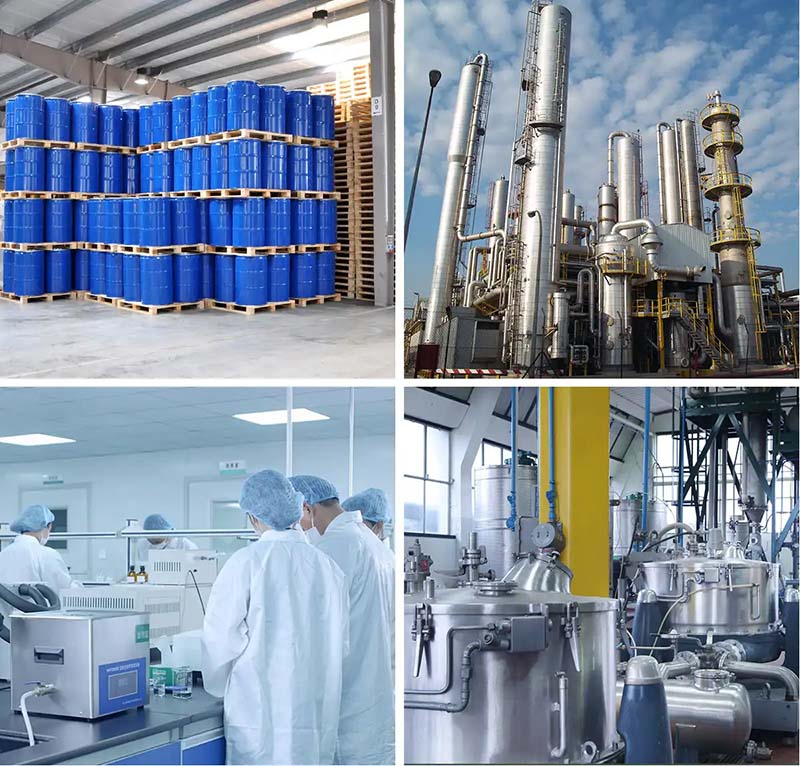
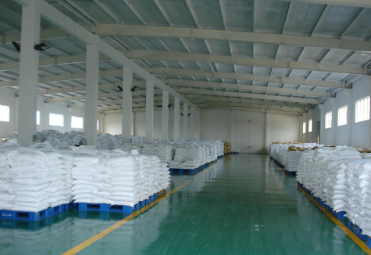
Fact Factory and Equipment Show