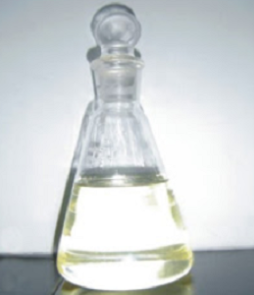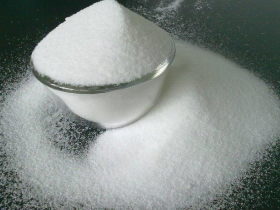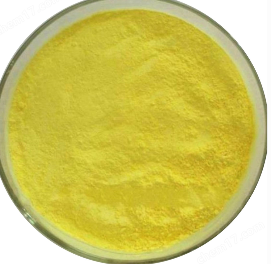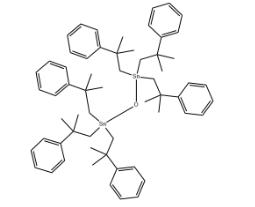
Fenbutatin oxide #CAS13356-08-6
Fenbutatin Oxide is an organotin pesticide. Fenbutatin Oxide is widely used as an aracacide in the control of mites, in particular spider mites.
Fenbutatin oxide is a non-systemic acaricide used to control a wide range of phytophagous mites on deciduous fruits, citrus, vines, selected nut crops, bananas, glasshouse crops and ornamentals.
Fenbutatin oxide is in the family of tin compounds widely used as stabilizers for plastics, additives to paint(as antifouling agents). Some have catalytic properties. Examples include butyl tin, dibutyl tin oxide. Their main hazard is associated with their high toxicity, in skin adsorption or inhalation.
Insecticide, Miticide: A U.S. EPA restricted Use Pesticide (RUP). A selective miticide for deciduous pome and stone fruits, citrus fruits, grapes, vegetables, berry fruit, nut crops (selected), ornamentals and greenhouse crops.
Organotin/phenyltin insecticide and selective miticide for deciduous pome and stone fruits, citrus fruits, grapes, vegetables, berry fruit, nut crops (selected), ornamentals, and greenhouse crops. A United States Environmental Protection Agency Restricted Use Pesticide (RUP)
Application of Fenbutatin oxide
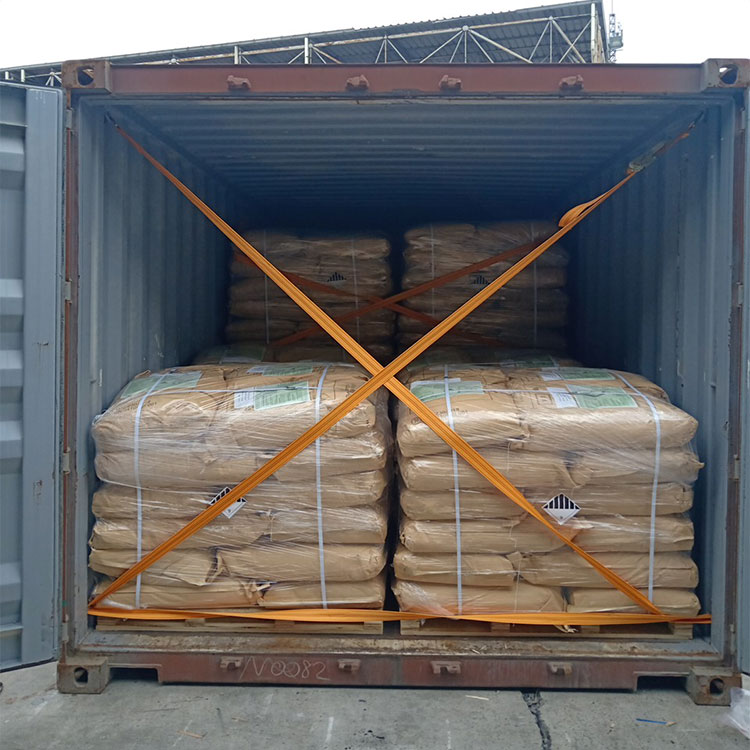
UN2811 Toxic solids, organic, n.o.s., Hazard Class: 6.1; Labels: 6.1-Poisonous materials, Technical Name Required
Fenbutatin oxide (1) dissociates slowly in water to the corresponding hydroxide [tris(2-methyl-2-phenylpropyl)tin hydroxide 21. The neophenyl moiety of fenbutatin oxide was stable at pH 5, 7, and 9 at 25 °C with minimal degradation occurring after 30 days (Home, 1987a).
| Fenbutatin oxide Chemical Properties |
| Melting point | 142-145°C |
| Boiling point | 235-240 °C(Press: 0.05 Torr) |
| density | 0.42 g/cm3 |
| vapor pressure | 8.5×10⁻⁸ Pa (20 °C) |
| Fp | 100 °C |
| storage temp. | Sealed in dry,Room Temperature |
| solubility | Chloroform (Slightly), DMSO (Very Slightly, Heated, Sonicated) |
| form | solid |
| Water Solubility | 0.005 mg l-1 (23 °C) |
| Hydrolytic Sensitivity | 4: no reaction with water under neutral conditions |
| Merck | 13,3991 |
| Henry's Law Constant | 4.9×10³ mol/(m3Pa) at 25℃, HSDB (2015) |
| Major Application | agriculture environmental |
| InChI | InChI=1S/6C10H13.O.2Sn/c6*1-10(2,3)9-7-5-4-6-8-9;;;/h6*4-8H,1H2,2-3H3;;; |
| InChIKey | HOXINJBQVZWYGZ-UHFFFAOYSA-N |
| SMILES | [Sn](CC(C)(C1=CC=CC=C1)C)(CC(C)(C1=CC=CC=C1)C)(CC(C)(C1=CC=CC=C1)C)O[Sn](CC(C)(C1=CC=CC=C1)C)(CC(C)(C1=CC=CC=C1)C)CC(C)(C1=CC=CC=C1)C |
| EPA Substance Registry System | Fenbutatin oxide (13356-08-6) |
| Safety Information |
| Hazard Codes | Xn;N,N,Xn,T+ |
| Risk Statements | 21-36/38-50/53-26 |
| Safety Statements | 28-36/37-45-60-61 |
| RIDADR | UN 2811 |
| WGK Germany | 3 |
| RTECS | JN8770000 |
| TSCA | TSCA listed |
| HazardClass | 9 |
| PackingGroup | III |
| Storage Class | 6.1A - Combustible acute toxic Cat. 1 and 2 very toxic hazardous materials |
| Hazard Classifications | Acute Tox. 2 Inhalation Aquatic Acute 1 Aquatic Chronic 1 Eye Irrit. 2 Skin Irrit. 2 |
| Hazardous Substances Data | 13356-08-6(Hazardous Substances Data) |
| Toxicity | LD50 in rats, rabbits (mg/kg): >2000 orally; >2000 percutaneously (Zweig) |
Fact Factory and Equipment Show