n-Butyllithium #CAS109-72-8
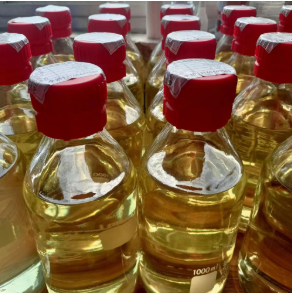
n-Butyllithium is a Colorless or slightly yellow transparent liquid at room temperature, also comes in powder form. Boiling point is 80-90℃(0.013Pa), relative density is 0.68-0.70. Soluble in many organic solvents. Stable in room temperature, lithium hydride removable by heating. Disintegrates in water, soluble in hydrocarbons and ethers, forms complex compounds with ethers, amines, and sulfides, and uses N-hexane as a solvent.
Application of n-Butyllithium
N-Butyllithium solution is mostly used as a pharmaceutical intermediate to synthesize anionic polymerization initiator. It is also used to produce rubber (such as integral rubber SIBR, which is the most versatile diene rubber to date), fragrance, liquid crystal materials, and other industries. It is a chemical product intermediate, linking agent, alkylating agent, and polymerization catalyst. As a catalyst, N-Butyllithium is widely used as a pharmaceutical intermediate, liquid crystal monomer, and pesticide production catalyst.
N-Butyllithium is also widely used in organic syntheses, especially in growing carbon chains, and it is a staple laboratory product in reactions such as:
1) Metallization reaction: R-H + n-Butyl-Li → R-Li + Butane, in which the produced lithium alkyl can react with many substances.
2) Direct metallization: the aromatic compound that connects the substitute reacts with N-Butyllithium, and lithium metal can be attached to the aromatic compound.
3) Nucleophilic addition and substitution reaction.
4) Halogen-metal replacement.
| n-Butyllithium Chemical Properties |
| Melting point | -95 °C |
| Boiling point | 80 °C |
| density | 0.68 g/mL at 20 °C |
| vapor pressure | 163 hPa ( 20 °C) |
| Fp | 10 °F |
| storage temp. | 2-8°C |
| solubility | Miscible with diethyl ether and cyclohexane. |
| form | liquid |
| color | yellow |
| Specific Gravity | 0.695 |
| Odor | Odor of the solvent |
| explosive limit | 1.2-7.8% (v/v) |
| Water Solubility | vigorous reaction |
| Sensitive | Air & Moisture Sensitive |
| Hydrolytic Sensitivity | 8: reacts rapidly with moisture, water, protic solvents |
| BRN | 1209227 |
| Exposure limits | ACGIH: TWA 50 ppm (Skin) OSHA: TWA 500 ppm(1800 mg/m3) NIOSH: IDLH 1100 ppm; TWA 50 ppm(180 mg/m3) |
| InChI | 1S/C4H9.Li/c1-3-4-2;/h1,3-4H2,2H3; |
| InChIKey | MZRVEZGGRBJDDB-UHFFFAOYSA-N |
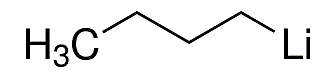
| SMILES | [Li]CCCC |
| LogP | 1.25-2.31 |
| CAS DataBase Reference | 109-72-8(CAS DataBase Reference) |
| NIST Chemistry Reference | Butyl lithium(109-72-8) |
| EPA Substance Registry System | Lithium, butyl- (109-72-8) |
| Safety Information |
| Hazard Codes | F,C,N |
| Risk Statements | 14/15-17-34-48/20-51/53-62-65-67-63-35-11-15-50/53-66 |
| Safety Statements | 6-9-16-26-36/37/39-45-61-62-6A-46-43B-43-60-33-29-5 |
| RIDADR | UN 3399 4.3/PG 1 |
| WGK Germany | 3 |
| F | 3-10 |
| Autoignition Temperature | 240°C |
| TSCA | TSCA listed |
| HazardClass | 4.3 |
| PackingGroup | I |
| HS Code | 29319090 |
| Storage Class | 4.2 - Pyrophoric and self-heating hazardous materials |
| Hazard Classifications | Aquatic Chronic 2 Asp. Tox. 1 Eye Dam. 1 Flam. Liq. 2 Pyr. Liq. 1 Skin Corr. 1B STOT SE 3 Water-react 1 |
| Toxicity | There is little toxicity data available for the butyllithiums; for data on ether and hydrocarbon solvents, see the appropriate LCSSs. |
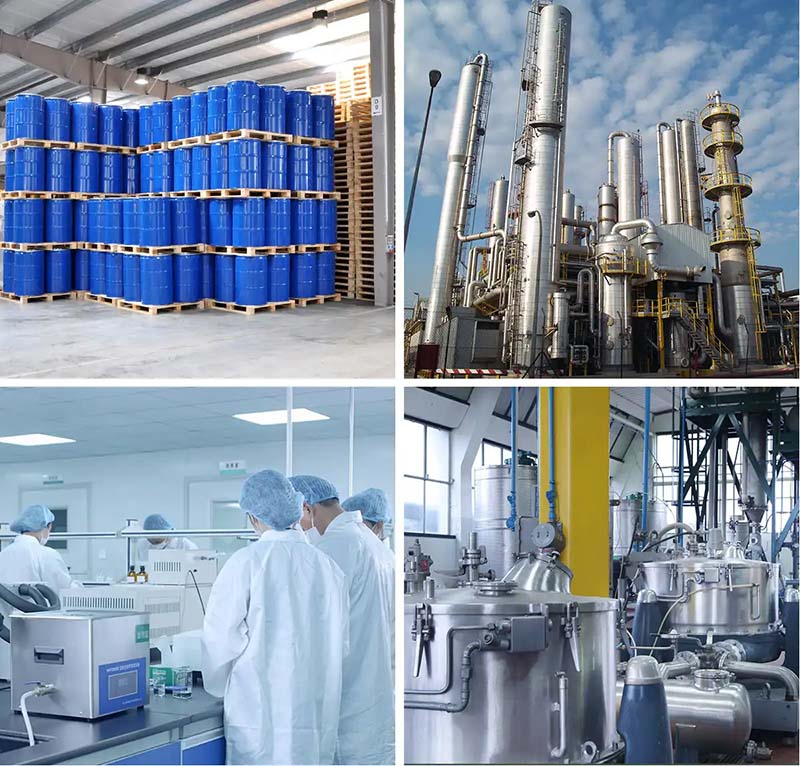
Fact Factory and Equipment Show