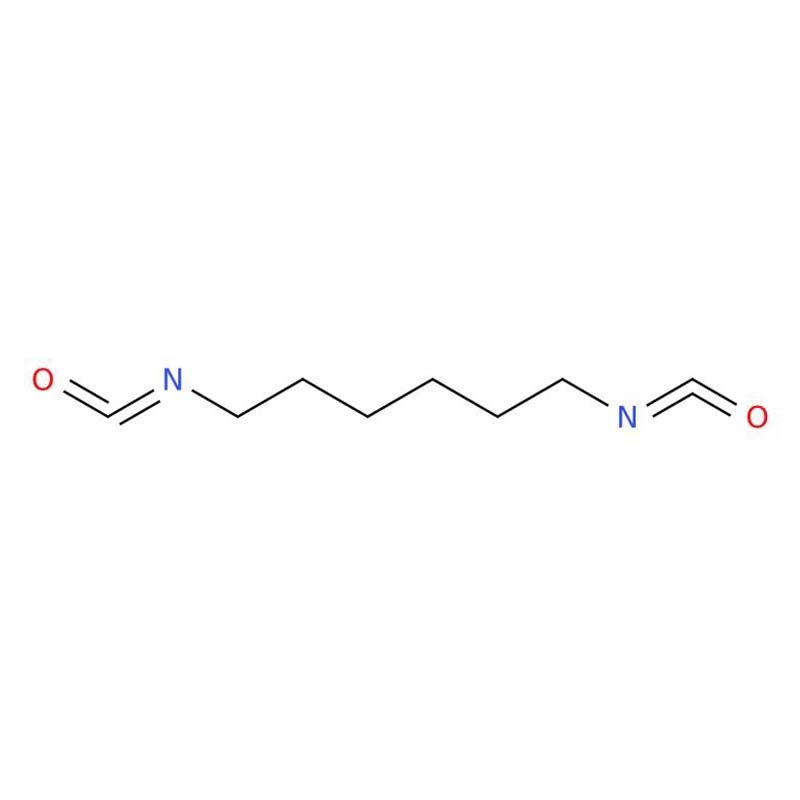
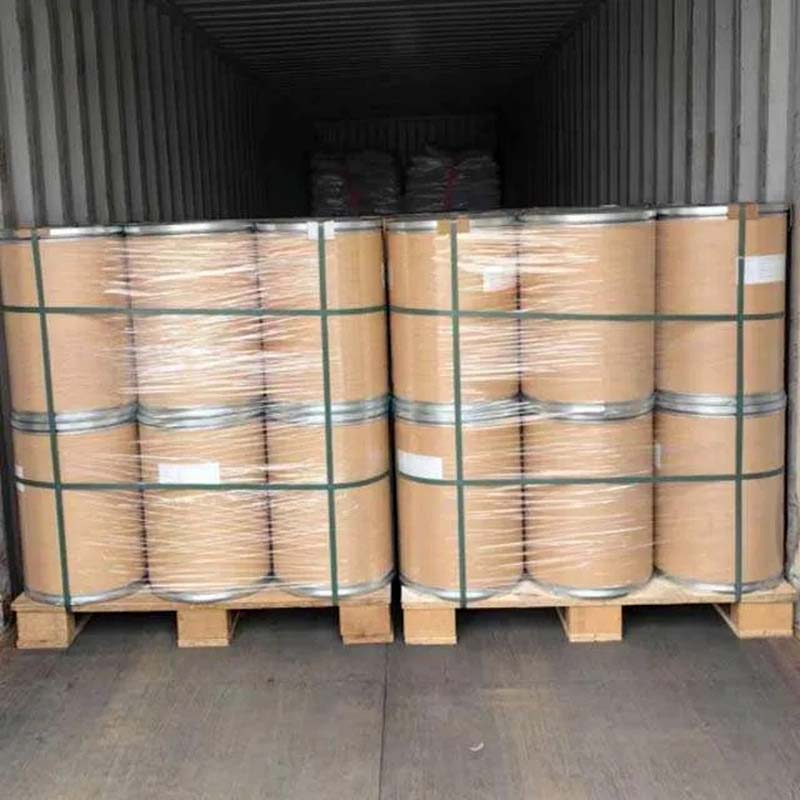
Hexamethylene Diisocyanate CAS:822-06-0
High Boiling Properties:This product generally has a boiling range between 255°C and 261°C, making it suitable for use in high-temperature industrial processes.
Controlled Water Reactivity:It shows low solubility in water and stable hydrolytic properties, allowing its use in specific water-based chemical systems.
Conditional Stability:Although stable under proper storage conditions, it must be kept away from moisture in the air to avoid unwanted chemical changes.
Industrial Applications:Thanks to its good heat resistance and specific reactivity, it is widely used in coatings, adhesives and sealants that require high-temperature performance.
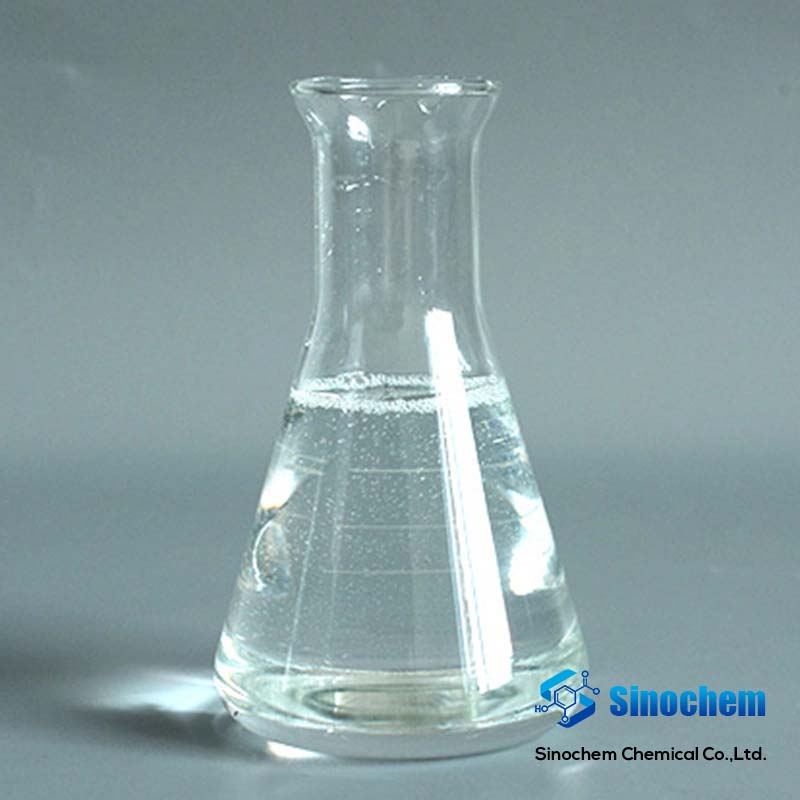
Hexamethylene diisocyanate, commonly known as HDI, usually exists as a clear to light yellow liquid with a strong pungent odor. It has low solubility in water and will undergo slow hydrolysis when exposed to water-based environments. Its physical properties include a relative density of around 1.05 at room temperature, a melting range of -67°C to -55°C, and a boiling range of 255°C to 261°C. The saturated vapor density of this substance is 46 mg/m³ at 20°C and 137 mg/m³ at 30°C respectively.
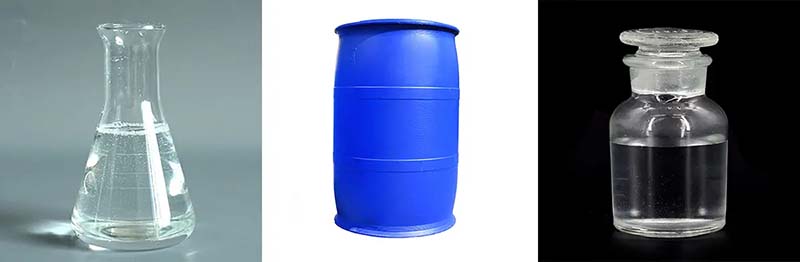
Application of Hexamethylene diisocyanate
Hexamethylene diisocyanate (HDI) is one of the most common aliphatic disocyanates, It is a monomer used in the production of polyurethane foams and exceptionally high-quality coatings, and is found in some industrial paints and spray painting operations. It is a compound which reacts readily with water and alcohols (Von Burg 1993). It has a vapor pressure of 0.05 mm Hg at room temperature, but can be present in aerosol form allowing a potentially higher exposure to individuals. The HDI-BT trimer is often present for similar industrial uses. It would be expected to have a lower vapor pressure; however, the aerosol form can also be present, allowing potentially higher exposure of HDI-BT to individuals. Hexamethylene diisocyanate reacts slowly with water to form carbon dioxide (HSDB 1996). The base-catalyzed reaction of Hexamethylene diisocyanate with alcohols should be carried out in inert solvents; the reaction may occur with explosive violence in the absence of solvents (NFPA 1994).
1,6-Hexamethylenediisocyanate is a chemical intermediate used in the production of urethane products.
Parameters
| Melting point | -55°C |
| Boiling point | 82-85 °C/0.1 mmHg |
| density | 1.047 g/mL at 20 °C (lit.) 1.047 g/mL at 20 °C |
| vapor pressure | 0.05 mm Hg ( 25 °C) |
| refractive index | n20/D 1.453 |
| Fp | 248 °F |
| storage temp. | Store below +30°C. |
| form | Liquid |
| Specific Gravity | 1.05 |
| color | Clear colorless to slightly yellow |
| explosive limit | 0.9-9.5%(V) |
| Water Solubility | Reacts |
| Sensitive | Moisture Sensitive |
| BRN | 956709 |
| Exposure limits | TLV-TWA 0.0343 mg/m3 (0.005 ppm) (ACGIH). |
| Stability: | Stable. Moisture sensitive. Combustible. Incompatible with strong oxidizing agents, strong bases, amines, acids. May react explosively with alcohols in the presence of base without a diluting solvent. Heating above 200 C may cause polymerization. |
| InChIKey | RRAMGCGOFNQTLD-UHFFFAOYSA-N |
| LogP | 3.2 at 20℃ |
| CAS DataBase Reference | 822-06-0(CAS DataBase Reference) |
| NIST Chemistry Reference | 1,6-Hexamethylene diisocyanate(822-06-0) |
| EPA Substance Registry System | Hexamethylene-1,6-diisocyanate (822-06-0) |
Safety Information
| Hazard Codes | T,T+,F |
| Risk Statements | 23-36/37/38-42/43-41-34-26-22-39/23/24/25-23/24/25-11 |
| Safety Statements | 26-28-38-45-28A-36/37/39-23-36/37-16-7 |
| OEB | D |
| OEL | TWA: 0.005 ppm (0.035 mg/m3), Ceiling: 0.020 ppm (0.140 mg/m3) [10-minute] |
| RIDADR | UN 2281 6.1/PG 2 |
| WGK Germany | 1 |
| RTECS | MO1740000 |
| F | 10-19-21 |
| Autoignition Temperature | 454 °C |
| TSCA | Yes |
| HazardClass | 6.1 |
| PackingGroup | II |
| HS Code | 29291090 |
| Hazardous Substances Data | 822-06-0(Hazardous Substances Data) |
| Toxicity | LD50 orally in Rabbit: 746 mg/kg LD50 dermal Rabbit 570 mg/kg |