Dibutyl phthalate #CAS84-74-2
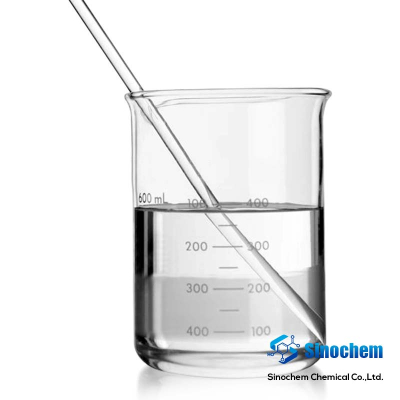
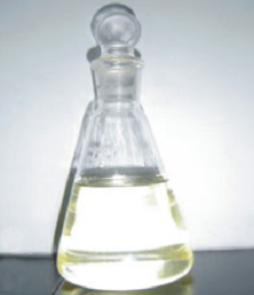
Dibutyl phthalate occurs as an odorless, oily, colorless, or very slightly yellow-colored, viscous liquid.
Dibutyl phthalate is included as an insect repellent in some aerosol sprays used to treat flystrike in sheep. It is colorless oily liquid with a very weak aromatic odor.
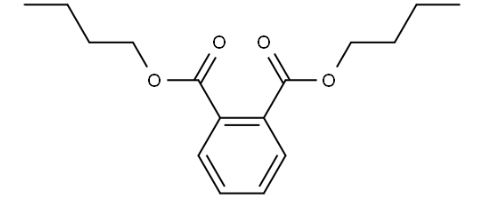
ChEBI: Dibutyl phthalate is a phthalate ester that is the diester obtained by the formal condensation of the carboxy groups of phthalic acid with two molecules of butan-1-ol. Although used extensively as a plasticiser, it is a ubiquitous environmental contaminant that poses a risk to humans. It has a role as an environmental contaminant, a teratogenic agent, a plasticiser, a metabolite and an EC 3.2.1.20 (alpha-glucosidase) inhibitor. It is a phthalate ester and a diester. It is functionally related to a butan-1-ol.
Dibutyl phthalate is a colorless oily liquid. Dibutyl phthalate is insoluble in water. The primary hazard is the threat to the environment. Immediate steps should be taken to limit its spread to the environment. Since Dibutyl phthalate is a liquid Dibutyl phthalate can easily penetrate the soil and contaminate groundwater and nearby streams. Dibutyl phthalate is combustible though Dibutyl phthalate may take some effort to ignite. Dibutyl phthalate is used in paints and plastics and as a reaction media for chemical reactions.
Application of Dibutyl phthalate
A phthalate metabolite with genotoxic effect.
Dibutyl phthalate is used in plasticizers, cosmetics, safety glass, insecticides, printing inks, paper coatings, adhesives, elastomers and explosives; solvent in polysulfide dental impression materials; solvent for perfume oils; perfume fixative; textile lubricating agent; solid rocket propellent; emollient in aerosol antiperspirants; insect repeller; plasticizer in various plastic materials.
Di-n-butyl phthalate has been used as an insect repellant.
| Dibutyl phthalate Chemical Properties |
| Melting point | -35 °C (lit.) |
| Boiling point | 340 °C (lit.) |
| density | 1.043 g/mL at 25 °C (lit.) |
| vapor density | 9.6 (vs air) |
| vapor pressure | 1 mm Hg ( 147 °C) |
| refractive index | n |
| Fp | 340 °F |
| storage temp. | 2-8°C |
| solubility | Very soluble in alcohol, ether, acetone, benzene |
| pka | 3.79 |
| form | Liquid |
| color | APHA: ≤10 |
| Specific Gravity | 1.049 (20/20℃) |
| Relative polarity | 0.272 |
| Odor | odorless |
| PH | 7 (20°C, 10mg/L) |
| explosive limit | 0.47%, 236°F |
| Water Solubility | Slightly soluble. 0.0013 g/100 mL |
| Thermal Conductivity | 0.132 W/(m·K) at 25 ℃ |
| FreezingPoint | -35℃ |
| Merck | 14,3035 |
| BRN | 1914064 |
| Henry's Law Constant | 6.3 x 10⁻⁵ atmm3/mol (quoted, Petrasek et al., 1983) |
| Exposure limits | NIOSH REL: TWA 5 mg/m3, IDLH 4,000 mg/m3; OSHA PEL: TWA 5 mg/m3; ACGIH TLV: TWA 5 mg/m3. |
| Dielectric constant | 6.0(45℃) |
| Cosmetics Ingredients Functions | PERFUMING FRAGRANCE PLASTICISER SOLVENT |
| Cosmetic Ingredient Review (CIR) | Dibutyl phthalate (84-74-2) |
| InChI | 1S/C16H22O4/c1-3-5-11-19-15(17)13-9-7-8-10-14(13)16(18)20-12-6-4-2/h7-10H,3-6,11-12H2,1-2H3 |
| InChIKey | DOIRQSBPFJWKBE-UHFFFAOYSA-N |
| SMILES | CCCCOC(=O)c1ccccc1C(=O)OCCCC |
| LogP | 4.46-4.57 at 20-30℃ |
| CAS DataBase Reference | 84-74-2(CAS DataBase Reference) |
| NIST Chemistry Reference | Dibutyl phthalate(84-74-2) |
| EPA Substance Registry System | Dibutyl phthalate (84-74-2) |
| Safety Information |
| Hazard Codes | T,N,F |
| Risk Statements | 61-50-62-39/23/24/25-23/24/25-11 |
| Safety Statements | 53-45-61-36/37-16 |
| RIDADR | UN 3082 9/PG 3 |
| OEB | B |
| OEL | TWA: 5 mg/m3 |
| WGK Germany | 2 |
| RTECS | TI0875000 |
| Autoignition Temperature | 756 °F |
| TSCA | TSCA listed |
| HazardClass | 9 |
| PackingGroup | III |
| HS Code | 29173100 |
| Storage Class | 6.1C - Combustible acute toxic Cat.3 toxic compounds or compounds which causing chronic effects |
| Hazard Classifications | Aquatic Acute 1 Aquatic Chronic 2 Repr. 1B |
| Hazardous Substances Data | 84-74-2(Hazardous Substances Data) |
| Toxicity | Acute oral LD50 for rats 8,000 mg/kg (RTECS, 1985). |
| IDLA | 4,000 mg/m3 |
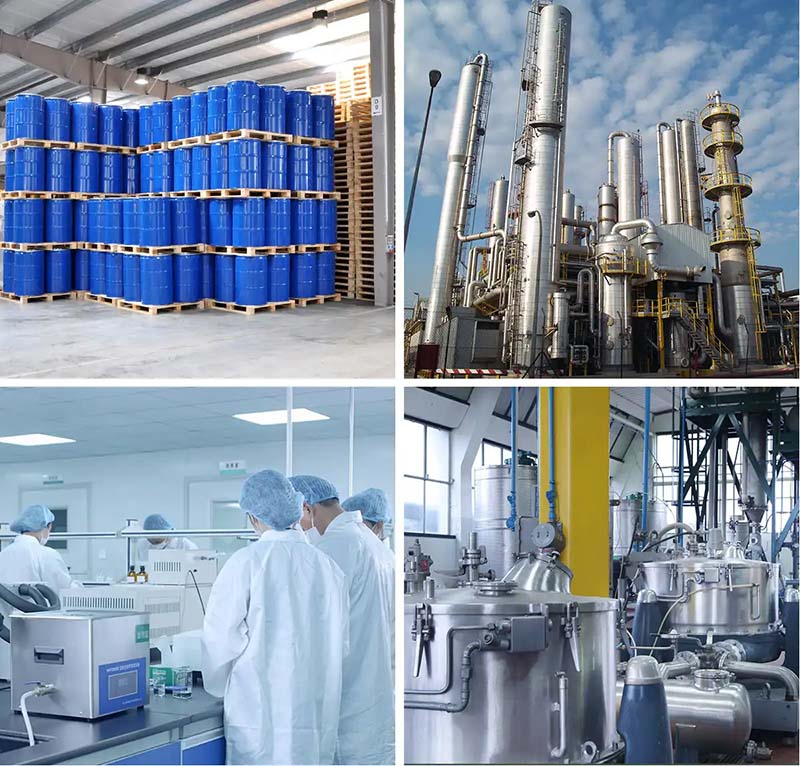
Fact Factory and Equipment Show