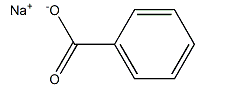
Sodium benzoate #CAS532-32-1
Sodium benzoate, also known as benzoic acid sodium, is commonly used as food preservatives in food industry, odorless or with slight smell of benzoin, and tastes sweet astringency. Stable in air, can absorb moisture in open air. It’s naturally found in blueberry, apple, plum, cranberry, prunes, cinnamon and cloves, with weaker antiseptic performance than benzoic acid. Antiseptic performance of 1.180g sodium benzoate is equivalent of about 1g benzoic acid. In acidic environment, sodium benzoate have obvious inhibitory effect on a variety of microorganisms: when pH is at 3.5, 0.05% solution can completely inhibit the growth of yeast; while when pH is above 5.5, it has poor effect on a lot of mold and yeast; hardly has any effect in alkaline solution. After sodium benzoate enters into the body, in the process of biotransformation, it would combine with glycine to be uric acid, or combine with glucuronic acid to be glucosiduronic acid, and all to be eliminated from the body in urine, not to accumulate in the body. As long as it is within the scope of the normal dosage, it would be harmless to the human body, and it is a safe preservatives. It also can be used for carbonated beverages, concentrated juice, margarine, chewing gum base, jam, jelly, soy sauce, etc. Human acceptable daily intake (ADI) < 5 mg/kg body weight (take benzoic acid as calculation basis).
Sodium benzoate has big lipophilicity, and it is easy to penetrate cell membrane into the cells, interfere in permeability of cell membrane, and inhibit cell membrane’s absorption of amino acids; cause Ionization acidification of alkaline storage in the cell when entering into, inhibit activity of respiratory enzymes, and stop condensation reaction of acetyl coenzyme A, and thereby achieve the purpose of food antiseptic.
The above information is edited by the Chemicalbook He Liaopu.
Application of Sodium benzoate
Sodium benzoate is also an important preservative of acid type food. It transforms into effective form of benzoic acid during application. See benzoic acid for application range and dosage. In addition, it also can be used as fodder preservative.
Preservatives; antimicrobial agent.
Sodium benzoate agent is a very important preservative of acid type fodder. It transforms into effective form of benzoic acid during application. See benzoic acid for application range and dosage. In addition, it also can be used as food preservative.
Used in the research of pharmaceutical industry and plant genetic, also used as dye intermediates, fungicide and preservatives.
The product is used as food additive (preservative), fungicide in pharmaceutical industry, dye mordant, plasticizer in plastic industrial, and also used as organic synthetic intermediate of spices and others.
| Sodium benzoate Chemical Properties |
| Melting point | >300 °C (lit.) |
| density | 1,44 g/cm3 |
| vapor pressure | 0Pa at 20℃ |
| FEMA | 3025 | SODIUM BENZOATE |
| Fp | >100°C |
| storage temp. | room temp |
| solubility | H2O: 1 M at 20 °C, clear, colorless |
| pka | 4.03[at 20 ℃] |
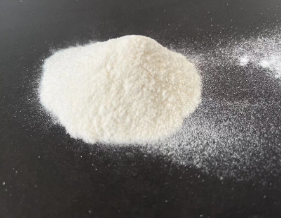
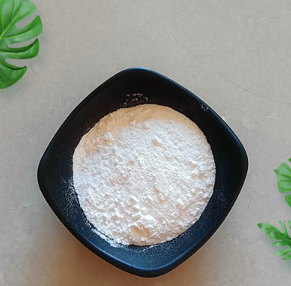
| form | Crystals, Granules, Flakes or Crystalline Powder |
| color | White |
| PH | 7.0-8.5 (25℃, 1M in H2O) |
| Odor | odorless |
| biological source | synthetic |
| Water Solubility | soluble |
| Merck | 14,8582 |
| BRN | 3572467 |
| Stability: | Stable, but may be moisture senstive. Incompatible with strong oxidizing agents, alkalis, mineral acids. |
| Cosmetics Ingredients Functions | FRAGRANCE ANTICORROSIVE PRESERVATIVE |
| InChI | 1S/C7H6O2.Na/c8-7(9)6-4-2-1-3-5-6;/h1-5H,(H,8,9);/q;+1/p-1 |
| InChIKey | WXMKPNITSTVMEF-UHFFFAOYSA-M |
| SMILES | [Na+].[O-]C(=O)c1ccccc1 |
| LogP | 1.88 |
| CAS DataBase Reference | 532-32-1(CAS DataBase Reference) |
| NIST Chemistry Reference | Sodium benzoate(532-32-1) |
| EPA Substance Registry System | Sodium benzoate (532-32-1) |
| Safety Information |
| Hazard Codes | Xi |
| Risk Statements | 36/37/38-62-63-68-36 |
| Safety Statements | 24/25-36-26 |
| WGK Germany | 1 |
| RTECS | DH6650000 |
| Autoignition Temperature | >500°C |
| TSCA | TSCA listed |
| HS Code | 29163100 |
| Storage Class | 13 - Non Combustible Solids |
| Hazard Classifications | Eye Irrit. 2 |
| Hazardous Substances Data | 532-32-1(Hazardous Substances Data) |
| Toxicity | LD50 orally in rats: 4.07 g/kg (Smyth, Carpenter) |
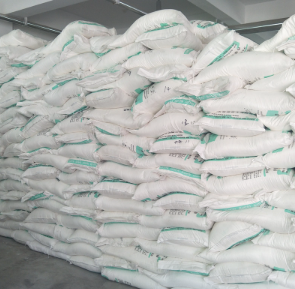
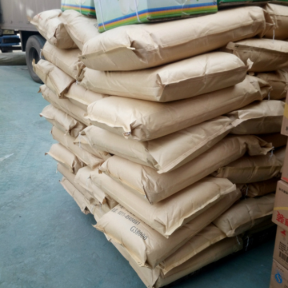
Fact Factory and Equipment Show