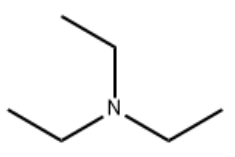
Triethylamine #CAS121-44-8
CAS Number:10034-93-2
Chemical Formula:C6H15N
Synonyms:
ai3-15425
N,N-Diethylethanamin
AKOS BBS-00004381
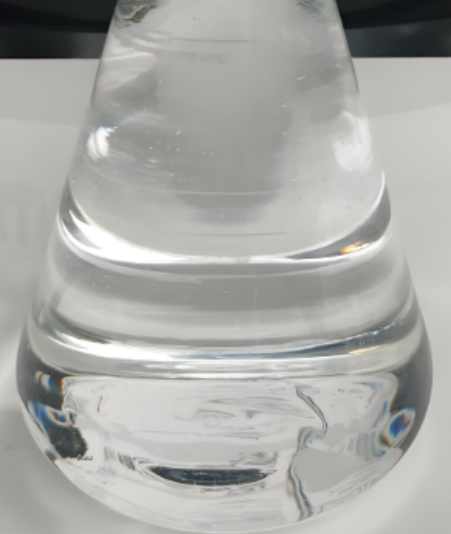
Appearance:Colourless Liquid
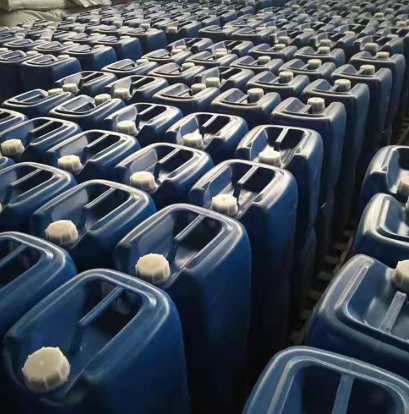
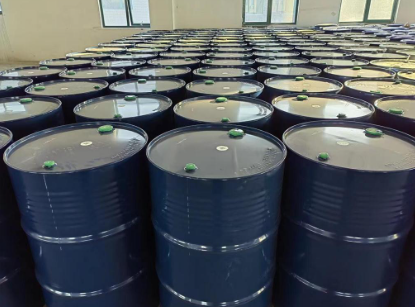
MOQ (Minimum Order Quantity): 1 FCL (Full Container Load)
Triethylamine #CAS121-44-8
Triethylamine (molecular formula: 2026-06-04), also known as N,N-diethylethylamine, is the simplest mesimilar trisubstituted tertiary amine. It exhibits typical properties of tertiary amines, including salt formation and oxidation. Triethylamine shows no reaction in the Hisberg reaction. It appears as a colorless to pale yellow transparent liquid with a strong ammonia odor and produces a slight fumes in air. Boiling point: 89.5℃; relative density (water=1): 0.70; relative density (air=1): 3.48; slightly soluble in water, soluble in ethanol and ether. Aqueous solutions are alkaline. It is flammable; its vapor can form explosive mixtures with air, with explosion limits of 1.2%–8.0%. It is toxic and highly irritating.
Triethylamine is a colorless to yellowish liquid with a strong ammonia to fish-like odor. It is a base commonly used in organic chemistry to prepare esters and amides from acyl chlorides. Like other tertiary amines,it catalyzes the formation of urethane foams and epoxy resins.
Clear, colorless to light yellow flammable liquid with a strong, penetrating, ammonia-like odor. Experimentally determined detection and recognition odor threshold concentrations were <400 μg/m3 (<100 ppbv) and 1.1 mg/m3 (270 ppbv), respectively (Hellman and Small, 1974). An odor threshold concentration of 0.032 ppbv was determined by a triangular odor bag method.
Application of Triethylamine
Triethylamine is a base used to prepare esters and amides from acyl chlorides as well as in the synthesis of quaternary ammonium compounds. It acts as a catalyst in the formation of urethane foams and epoxy resins, dehydrohalogeantion reactions, acid neutralizers for condensation reactions and Swern oxidations. It finds application in reverse phase high-performance liquid chromatography (HPLC) as a mobile-phase modifier. It is also used as an accelerator activator for rubber, as a propellant, as a corrosion inhibitor, as a curing and hardening agent for polymers and for the desalination of seawater. Furthermore, it is used in the automotive casting industry and the textile industry.
Triethylamine (TEA, Et3N) is an aliphatic amine. It is used to catalytic solvent in chemical synthesis; accelerator activators for rubber; wetting, penetrating, and waterproofing agents of quaternary ammonium types; curing and hardening of polymers (e.g., corebinding resins); corrosion inhibitor; propellant.
Triethylamine has been used during the synthesis of:
5′-dimethoxytrityl-5-(fur-2-yl)-2′-deoxyuridine
3′-(2-cyanoethyl)diisopropylphosphoramidite-5′-dimethoxytrityl-5-(fur-2-yl)-2′-deoxyuridine
polyethylenimine600-β-cyclodextrin (PEI600-β-CyD)
It may be used as a homogeneous catalyst for the preparation of glycerol dicarbonate, via transesterification reaction between glycerol and dimethyl carbonate (DMC).
Triethylamine is used as an anti-livering agent for urea- and melamine-based enamels and in the recovery of gelled paint vehicles (HSDB 1988). It is also used as a catalyst for polyurethane foams, a flux for copper soldering, and as a catalytic solvent in chemical synthesis (Hawley 1981). Triethylamine is used in accelerating activators for rubber; as a corrosion inhibitor for polymers; a propellant; wetting, penetrating, and waterproofing agent of quaternary ammonium compounds; in curing and hardening of polymers (i.e. core-binding resins); and as a catalyst for epoxy resins.
| Triethylamine Chemical Properties |
| Melting point | -115 °C |
| Boiling point | 90 °C |
| density | 0.728 |
| vapor density | 3.5 (vs air) |
| vapor pressure | 51.75 mm Hg ( 20 °C) |
| refractive index | n |
| FEMA | 4246 | TRIETHYLAMINE |
| Fp | 20 °F |
| storage temp. | Store below +30°C. |
| solubility | water: soluble112g/L at 20°C |
| pka | 10.75(at 25℃) |
| form | Liquid |
| Specific Gravity | 0.725 (20/4℃) |
| color | Clear |
| PH | 12.7 (100g/l, H2O, 15℃)(IUCLID) |
| Relative polarity | 1.8 |
| Odor | Strong ammonia-like odor |
| Odor Threshold | 0.0054ppm |
| Odor Type | fishy |
| explosive limit | 1.2-9.3%(V) |
| Water Solubility | 133 g/L (20 ºC) |
| Thermal Conductivity | 0.117 W/(m·K) at 25 ℃ |
| JECFA Number | 1611 |
| Merck | 14,9666 |
| BRN | 1843166 |
| Henry's Law Constant | 1.79 at 25 °C (Christie and Crisp, 1967) |
| Exposure limits | NIOSH REL: IDLH 200 ppm; OSHA PEL: TWA 25 ppm (100 mg/m3); ACGIH TLV: TWA 1 ppm, STEL 3 ppm (adopted). |
| Dielectric constant | 5.0(Ambient) |
| Stability: | Stable. Extremely flammable. Readily forms explosive mixtures with air. Note low flash point. Incompatible with strong oxidizing agents, strong acids, ketones, aldehydes, halogenated hydrocarbons. |
| Cosmetics Ingredients Functions | EMULSION STABILISING |
| InChI | 1S/C6H15N/c1-4-7(5-2)6-3/h4-6H2,1-3H3 |
| InChIKey | ZMANZCXQSJIPKH-UHFFFAOYSA-N |
| SMILES | CCN(CC)CC |
| LogP | 1.65 |
| CAS DataBase Reference | 121-44-8(CAS DataBase Reference) |
| NIST Chemistry Reference | Triethylamine(121-44-8) |
| EPA Substance Registry System | Triethylamine (121-44-8) |
| Absorption | cut-off at 278nm |
| Safety Information |
| Hazard Codes | F,C |
| Risk Statements | 11-20/21/22-35 |
| Safety Statements | 3-16-26-29-36/37/39-45-61 |
| RIDADR | UN 1296 |
| WGK Germany | 1 |
| RTECS | YE0175000 |
| F | 34 |
| Autoignition Temperature | 593 °F |
| Hazard Note | Highly Flammable/Corrosive |
| TSCA | TSCA listed |
| HazardClass | 3 |
| PackingGroup | II |
| HS Code | 29211910 |
| Storage Class | 3 - Flammable liquids |
| Hazard Classifications | Acute Tox. 3 Dermal Acute Tox. 3 Inhalation Acute Tox. 3 Oral Eye Dam. 1 Flam. Liq. 2 Skin Corr. 1A STOT SE 3 |
| Hazardous Substances Data | 121-44-8(Hazardous Substances Data) |
| Toxicity | LD50 orally in rats: 0.46 g/kg (Smyth) |
| IDLA | 200 ppm |
Fact Factory and Equipment Show